



New Capabilities for Vibration Detection and Analysis
Our product designed for predictive maintenance has gained several powerful new features. At its core is a high-precision accelerometer with auto-adjusting full-scale ranges (up to ±16g), ensuring accurate vibration capture across a wide spectrum. In addition to standard metrics such as acceleration Peak, RMS, and Crest Factor, the sensor also provides statistical indicators like Standard Deviation, Kurtosis, and Skewness. Furthermore, it supports industry-relevant indicators compliant with ISO 10816, such as Velocity RMS and Displacement Peak-to-Peak, allowing for reliable long-term machine health assessment.
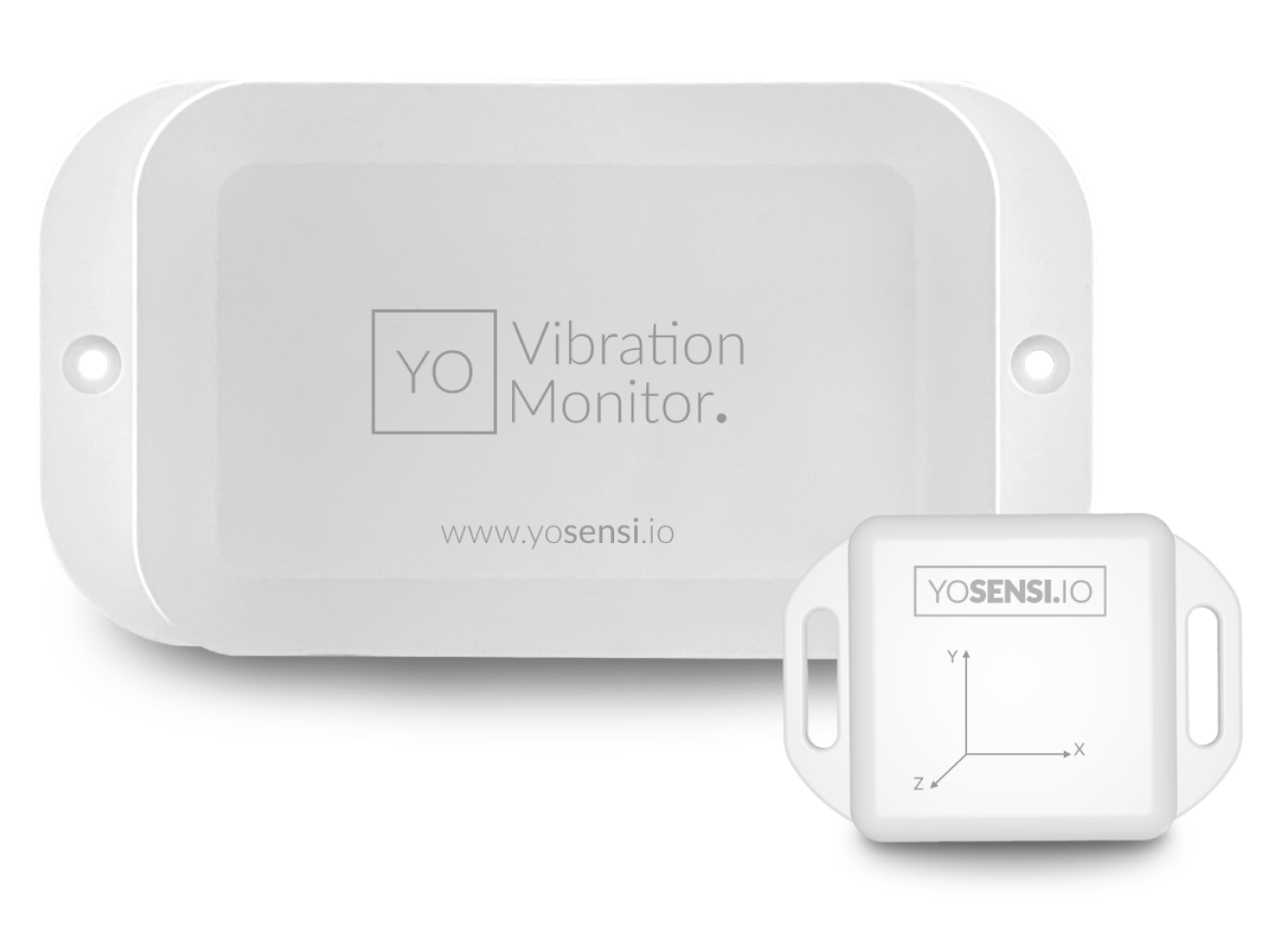
YO Vibration Monitor - Feature Overview
Our product designed for predictive maintenance has gained several powerful new features. At its core is a high-precision accelerometer with auto-adjusting full-scale ranges (up to ±16g), ensuring accurate vibration capture across a wide spectrum.
In addition to standard metrics such as acceleration Peak, RMS, and Crest Factor, the sensor also provides statistical indicators like Standard Deviation, Kurtosis, and Skewness. Furthermore, it supports industry-relevant indicators compliant with ISO 10816, such as Velocity RMS and Displacement Peak-to-Peak, allowing for reliable long-term machine health assessment.
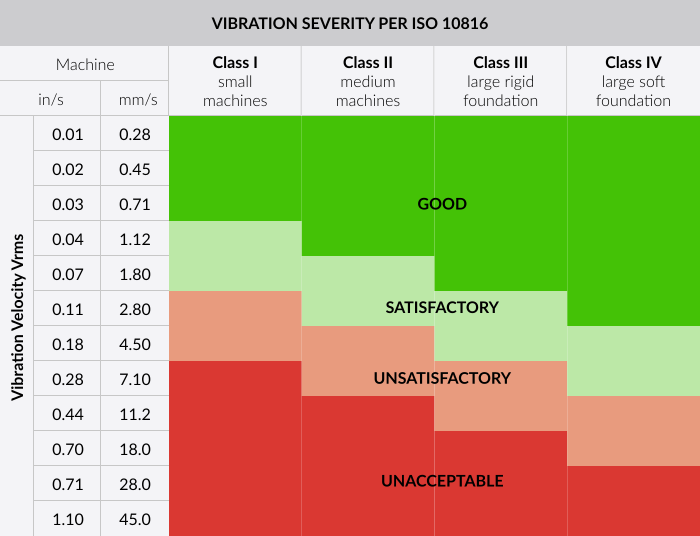
Each measurement uses 2048 samples per axis, which are processed via Power Spectral Density (PSD) analysis. PSD is used both to normalize spectral data and to integrate velocity and displacement values from acceleration data. This approach ensures consistent, interpretable, and engineering-grade results aligned with industrial standards and diagnostic practices.
Custom Frequency Band Analysis
A new feature allows users to define their own analysis bandwidth within a range of 1 Hz to 10 kHz. This gives engineers the flexibility to focus on the frequency range most relevant to their application.
Additionally, a new measurement called Peak Frequency has been added. It shows the frequency at which the highest vibration amplitude occurs for each axis - providing insight into potential resonance, imbalances, or other fault conditions.
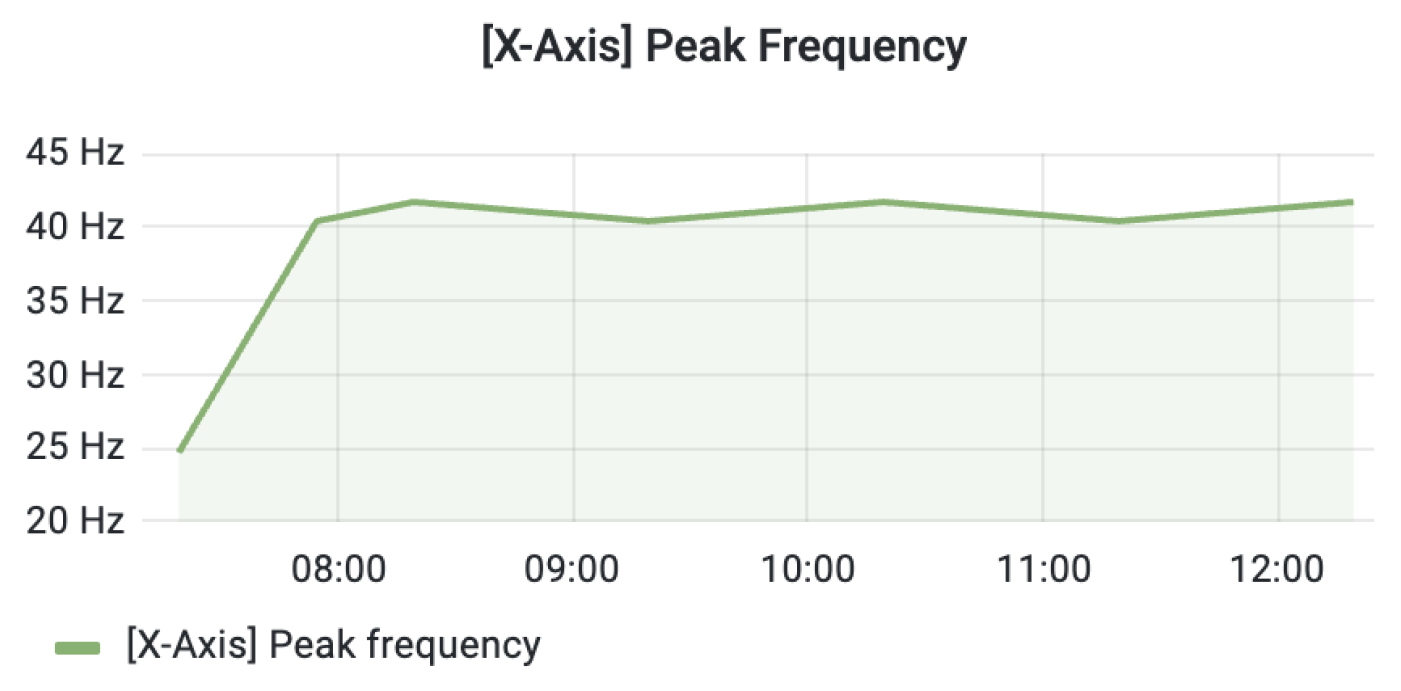
Vibration Detector
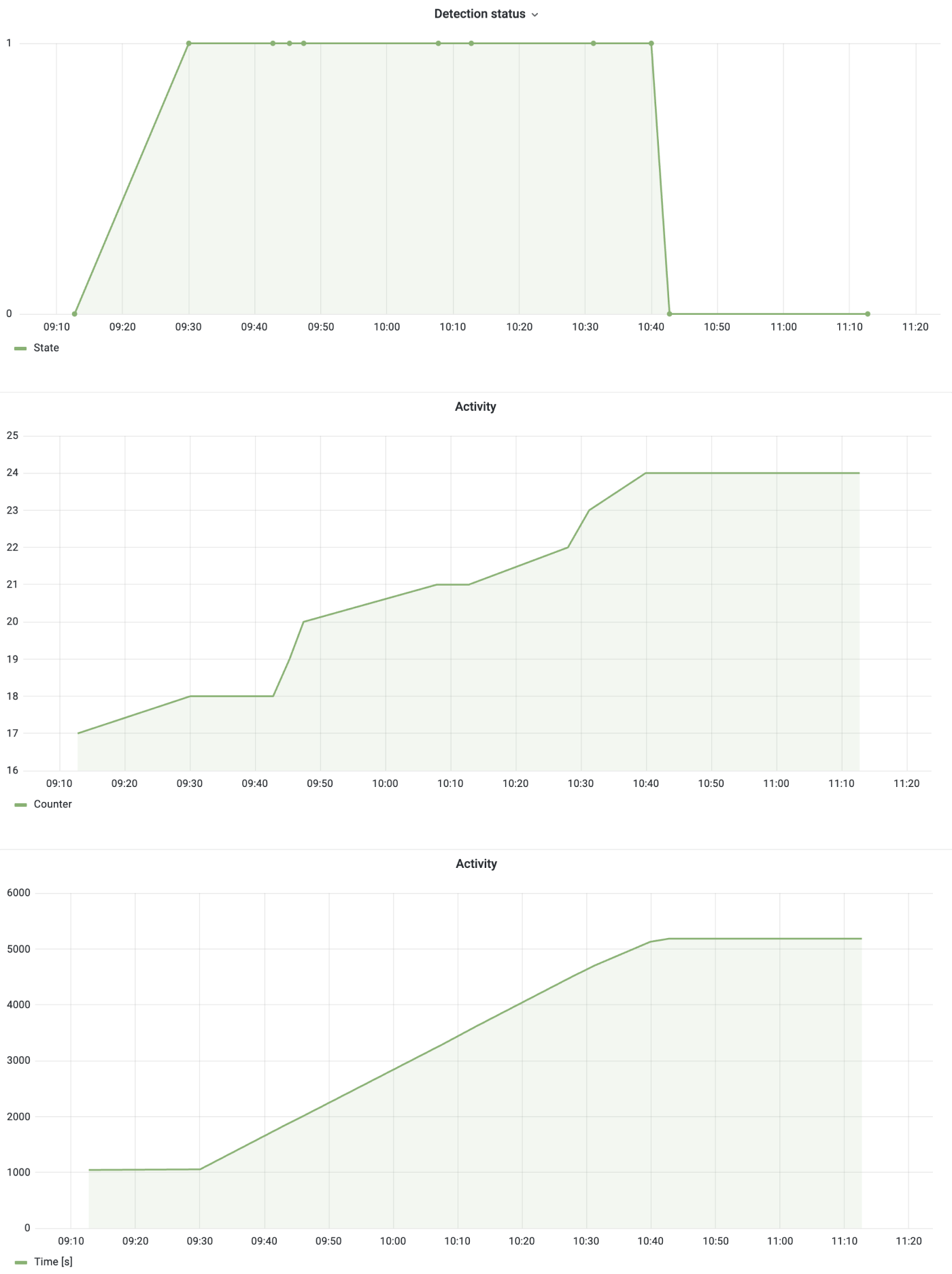
That’s not all. A major new feature introduced in YO Vibration Monitor firmware v1.2.0 is the vibration detector, which can be enabled by the user and configured with a custom threshold (from 0.1g to 1g).
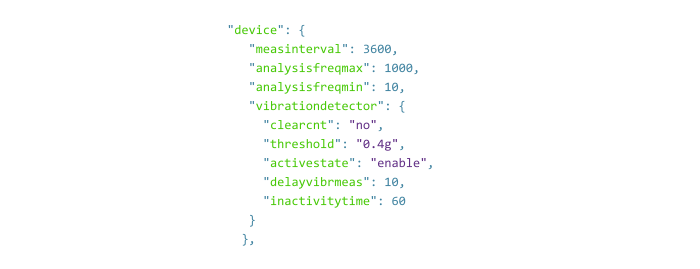
Important parameters can be configured by the user to allow more targeted monitoring:
- delayvibrmeas – defines a delay before measurement starts (useful for avoiding transient readings during machine startup),
- inactivitytime – sets a cooldown period after detection, during which the detector is disabled. This helps reduce measurement frequency for machines that operate in short bursts over long intervals.
The vibration detector uses a smart cyclical logic. After detection, it becomes active again after the inactivity window—unless the threshold is still exceeded, in which case it pauses again and retries later. This cyclical behavior allows the system to track not only the number of vibration events, but also the total active runtime of the machine based on vibration presence.
All of this data is recorded in the measurement payload and transmitted over LoRaWAN, enabling remote monitoring and historical analysis.
Example use cases
- Early Detection of Bearing Faults or Imbalance – the Peak Frequency metric, combined with statistical indicators, helps identify dominant frequencies linked to faults such as imbalance, misalignment, or bearing wear. This allows the sensor to provide early warnings before a failure occurs.
- Monitoring Machines with Intermittent or Cyclic Operation - for machines that start and stop periodically (e.g., pumps, compressors, lifts), the vibration detector allows measurements only when activity is detected.
- Custom Frequency Band Targeting - the sensor allows users to define a specific frequency analysis range (1 Hz – 10 kHz), enabling targeted monitoring based on the operating characteristics of each machine type.
- Runtime Tracking Based on Vibration Presence - by counting vibration events and measuring total active time, the sensor can estimate machine runtime without needing a dedicated RUN signal, supporting better maintenance planning.
Summary
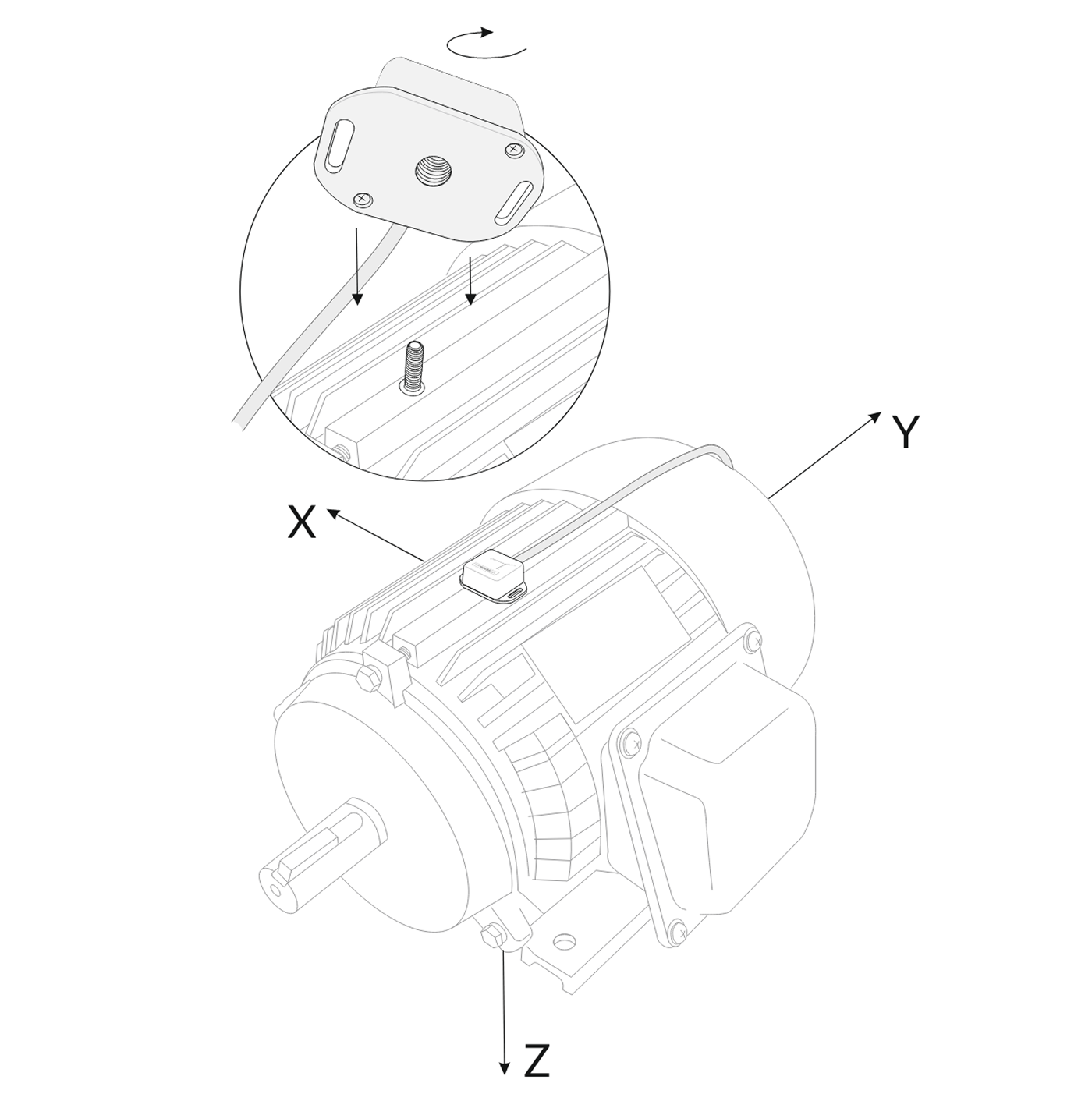
The latest update to the YO Vibration Monitor brings significant improvements in vibration diagnostics for predictive maintenance. With high-resolution 3-axis measurements, ISO 10816 compliance, and Power Spectral Density (PSD) processing, it provides robust insight into machine health. New features include user-defined frequency bands, Peak Frequency detection, and a smart vibration event detector with adjustable thresholds and logic. All measurements are transmitted over LoRaWAN for remote monitoring and historical analysis.